SINOFUDE have experience in gummy manufacturing equipment for more than 30 years.
Language
SINOFUDE have experience in gummy manufacturing equipment for more than 30 years.
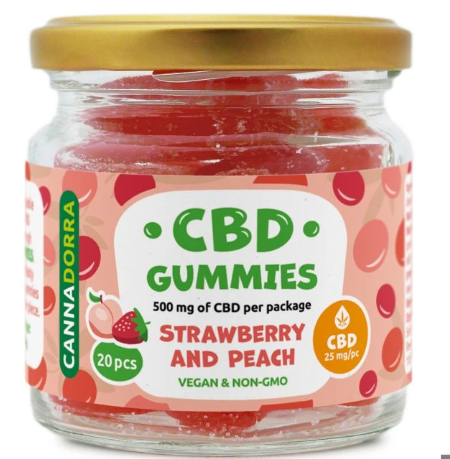
The global CBD candy market is expanding at a remarkable pace, emerging as the brightest growth hotspot in the functional food sector. According to the latest research report from Fortune Business Insights, CBD-infused products like gummies and chocolates are transitioning from niche offerings to mainstream consumption, with market potential continually unlocking. Consumers' craving for natural health solutions serves as the core driver—in fast-paced modern lifestyles, CBD confectionery's marketed benefits for anxiety relief, sleep improvement, and post-exercise recovery precisely address urban dwellers' wellness needs.

Market Expansion and Technological Innovation
North America continues to lead the global market, with U.S. CBD candy sales surpassing $1.5 billion in 2023 while maintaining a CAGR exceeding 25%. Europe follows closely, where countries like the UK and Germany have created developmental space for CBD foods through legislation distinguishing industrial hemp from recreational cannabis. Notably, Asia-Pacific shows divergent trends: Thailand has become the first Asian country to fully legalize CBD foods, while China, Singapore, and others maintain strict prohibitions.
Product innovation reveals three key trends:
Precision Dosing Technology: Leading companies employ nanoemulsion technology to enhance CBD bioavailability, allowing even low-dose products (e.g., 10mg) to deliver significant effects.
Multi-Functional Formulations: Products combining CBD with melatonin, curcumin, and other functional ingredients now account for 35% of the market (SPINS data).
Clean Label Movement: Organically certified, additive-free CBD candies are growing 2.3 times faster than conventional products.
Regulatory Labyrinth and Safety Crisis
The industry’s primary challenge remains a fragmented regulatory landscape:
FDA Stalemate in the U.S.: Despite the 2018 Farm Bill legalizing industrial hemp, the FDA has yet to establish a regulatory framework for CBD foods, leaving businesses in a policy gray zone.
Divergent EU Standards: While EFSA classifies CBD as a Novel Food, national standards vary drastically—France mandates THC ≤0%, whereas Switzerland permits ≤1%.
China’s Strict Prohibition: The 2024 notice from China’s National Narcotics Control Commission reiterates the absolute ban on industrial hemp in food production, with e-commerce platforms enacting comprehensive removals.
More severe is the trust crisis. A 2023 ConsumerLab independent study found:
28% of CBD gummies contained ≥30% less CBD than labeled
12% of samples contained undeclared THC (up to 5mg/serving)
Multiple products exceeded heavy metal limits
In May 2024, the FDA issued a warning letter to a major brand citing salmonella contamination and 400% CBD overages.
Pathways to Progress and Future Outlook
Industry breakthroughs require three pillars:
Scientific Validation: Johns Hopkins University’s 2024 clinical trial (n=2,000) marks the first quantitative study on CBD candy’s sustained-release effects.
Standardization: The Natural Products Association (NPA) is advancing GMP certification requiring third-party THC screening per batch.
Regulatory Collaboration: Health Canada’s "Cannabis Tracking System" offers a reference model for global supply-chain oversight.
Despite persistent challenges, Goldman Sachs projects the global CBD confectionery market will exceed $9 billion by 2028. Industry experts emphasize that future success belongs to enterprises integrating scientific rigor, compliance awareness, and supply-chain transparency. As Canopy Growth’s CEO stated: "This industry is experiencing painful adolescence, but the rewards of maturity will justify the journey."
Get In Touch With Us
Just leave your email or phone number on the contact form so we can provide you with more services!ontact form so we can provide you with more services!
CONTACT US
 Tel: +86-21-57416165 – 801~807
Mobile:+86-13917870833
 E-mail: inquiry@sinofude.com
 No. 8801, Puxing Road, Qingcun Town, Fengxian Dist, Shanghai 201407
Copyright © 2026 Shanghai Fude Machinery Manufacturing Co., Ltd. - www.fudemachinery.com All Rights Reserved.

